amphora wines
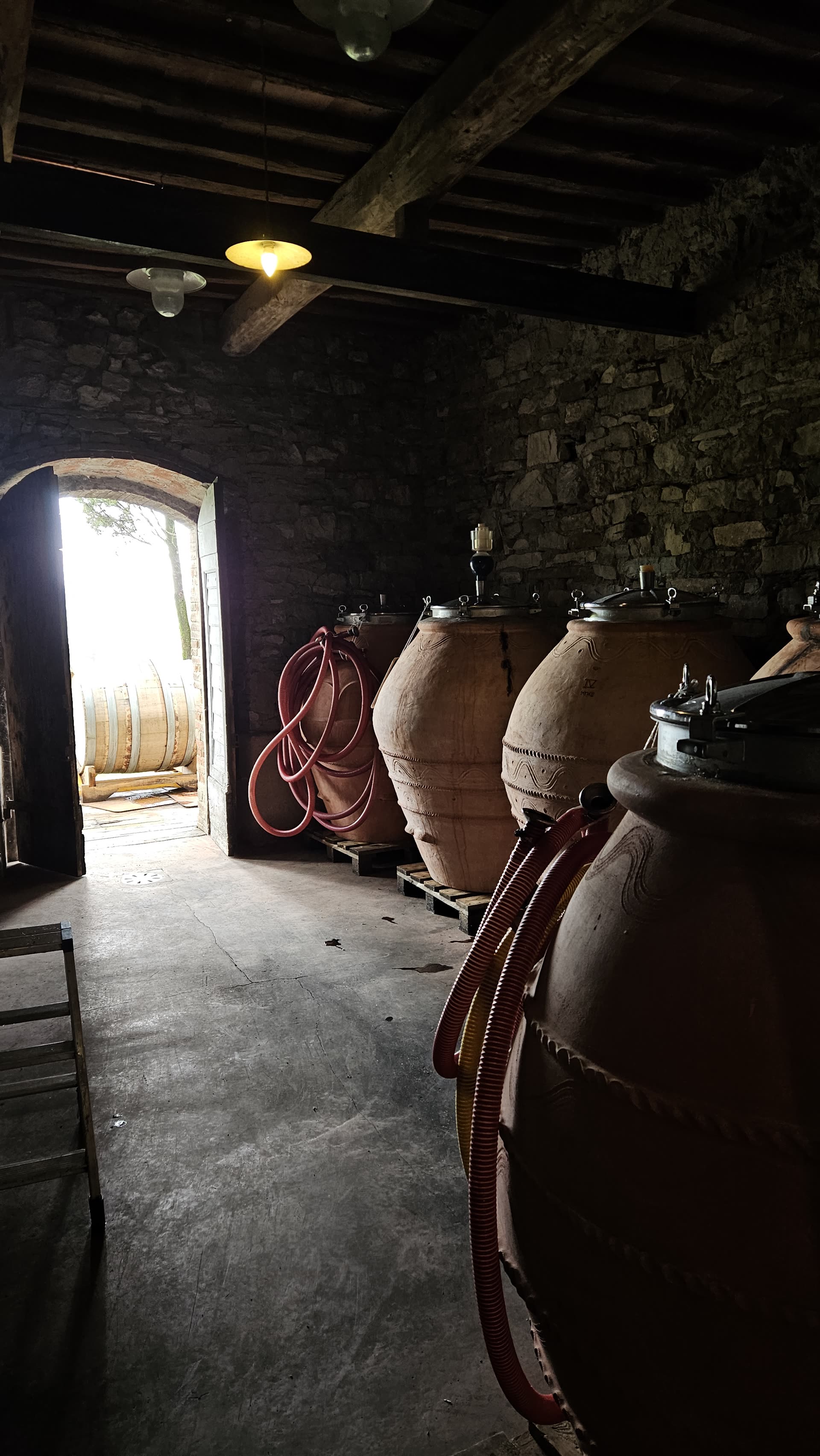
amphora wine is wine vinified and aged in terracotta containers - an ancient practice that is coming back today in tuscany and in chianti- terracotta is a neutral and slightly porous material - it gives the wine minimal contact with oxygen without adding flavours-
at grignanello the grapes - red and white - come from old vines of chianti classico - mostly planted in the early sixties- they ferment spontaneously and are vinified - macerated and aged in terracotta amphorae - giare and orci- maceration is long and changes from year to year - it can go beyond three months - we add no sulfites-
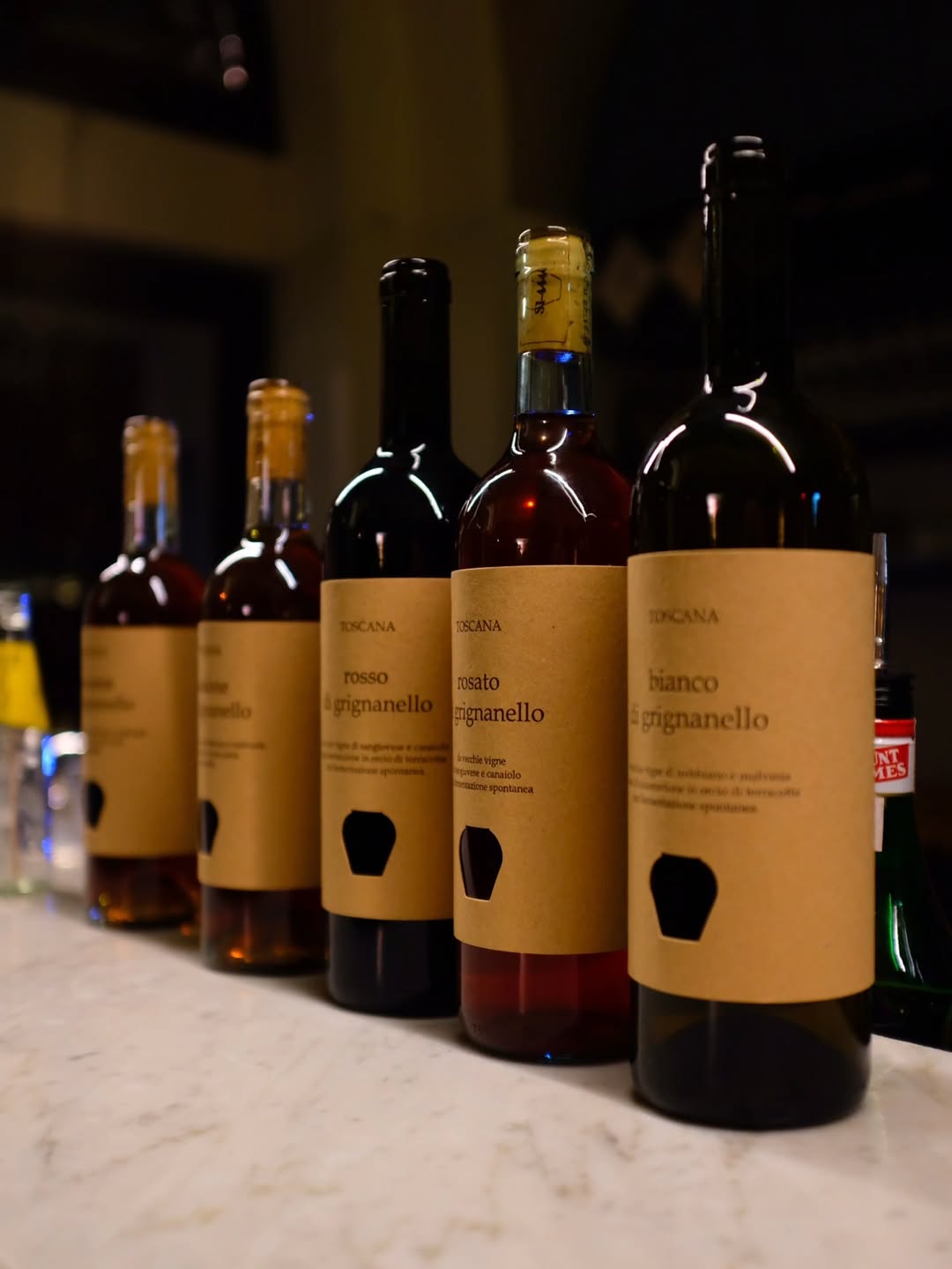
our wines
red
sangiovese - canaiolo - foglia tonda - colorino - malvasia nera grapes - made with a long maceration in terracotta amphora-
white
malvasia and trebbiano grapes macerated on the skins in amphora - an amber white wine-
rosé
sangiovese - canaiolo - foglia tonda - colorino - malvasia nera grapes - a dedicated harvest - forty-eight hours on the skins - stainless steel only - our only dry wine that does not go into amphora-
passione
our sweet wine - a passito aged in caratelli and in amphora-
grappa
our grappa-
extra virgin olive oil
from our olive trees - just under two thousand-
the wine is also available in a two- or three-litre bag-in-box carton - no oxygen in contact with the wine-
the availability of the wines may vary - write or call us to find out what is available-
questions about amphora wine
what is amphora wine?
it is wine vinified and aged in terracotta amphorae- an ancient practice that many producers are rediscovering today-
why a terracotta amphora?
unglazed terracotta is porous and lets a small amount of oxygen through - a micro-oxygenation that helps the ageing - without giving flavours to the wine- the wine stays pure - you taste the grape and nothing else- our amphorae are made of clay from impruneta - tuscan and twenty minutes from here - it seemed natural to work with a material from our own territory-
does amphora wine contain sulfites?
we add none- every wine contains a little anyway - because it forms naturally during fermentation- in our analyses the dry wines have total sulfur dioxide below 9 mg/l - european law requires "contains sulfites" on the label only above 10 mg/l - in the passito the drying of the grapes can push the residue a little higher - always spontaneously-
all questionsfewer questions
what is skin maceration and why is your white wine amber?
it is the contact of the must with the skins during fermentation- the skins give colour - tannins and aromas - and more structure- a traditional white wine does not keep them - an orange wine does - the longer they stay the darker the colour becomes - from golden yellow to orange and amber- with us the times vary from vintage to vintage - up to about six months for the white - up to about three and a half months for the red- beyond three and a half months malvasia and trebbiano tend to clarify on their own - the tannin softens and the colour settles - without any intervention-
what does spontaneous fermentation mean?
the grapes ferment thanks to the yeasts already on the skins and in the cellar - without adding selected yeasts- it is how wine has been made for centuries - it is slower and less predictable - but gives more complex wines - more tied to the place - because a mix of different yeasts is at work-
what is the difference between an amphora wine with no added sulfites and a conventional wine?
a conventional wine can use many practices and substances allowed by european law - including sulfites up to 150 mg/l in dry reds and 200 mg/l in dry whites - organic allows less - 100 mg/l in dry reds- we add neither sulfites nor other additives - we do not filter or fine- in the dry wines the analyses are below 9 mg/l- spontaneous fermentation and vineyards worked by hand - pruning - harvest - tying the vines with willow that we grow ourselves - no herbicides- we follow the principles of organic farming but we are not certified - except for the lavender-
which grapes do you use?
red and rosé - sangiovese - canaiolo - foglia tonda - colorino - malvasia nera- white and passito - malvasia bianca and trebbiano toscano- the vineyards were planted between 1962 and 1967 - about sixty years old- low yields and great concentration-
why do you not follow the chianti classico specification?
our vineyards are in chianti classico - planted in the sixties - and use only local native grapes- those blends and percentages were once the ones of chianti classico - today the specification no longer allows them - it asks for at least 80% sangiovese - and does not allow unglazed terracotta amphorae- we chose to carry on this way - which is why we are igt toscana - we prefer freedom of method and tradition to the denomination-
what is the passito (passione) like?
it is an igt toscana passito from malvasia and trebbiano- the best bunches dry for about four and a half months - hung on racks in the old vinaia of the hamlet - until the end of january- then pressing - fermentation and ageing in small cherry and chestnut casks or in amphora in the open - two very different wines- in winemaking it would be suitable to become vin santo del chianti classico - but by our choice we declassify it to passito - alcohol around 15% - goes well with dry pastries - cantucci - blue cheeses - the wine must always be sweeter than the food-
what is natural wine?
there is no legal definition- in practice it is a wine from grapes grown without pesticides or synthetic fertilisers - and made without additives- since 2023 for wines produced from that year onwards the ingredients must be listed on the label in europe - also through a qr code - so anyone who wants to knows what is in the glass- we say it with facts - grapes - spontaneous fermentation - amphora - no additives - no added sulfites-
where can i taste amphora wine in chianti?
with us - at grignanello - between panzano and castellina in chianti- tastings and cellar visits are by reservation - every day from 8 am to 6 pm- you will find the details in the tasting section-
orders and information
call or write to Carlo Alberto De Filippis
if you are a restaurateur press here instead